<

The Government on His Shoulders!
In a world wearied by the failures of men, Isaiah 9:6 offers a startling promise of hope and strength: “The government shall be upon His shoulder.” This is not the language of politics as we know it — it’s the language of divine dominion. The Hebrew word for “government” here is misrah (מִשְׂרָה), a word so unique it appears only in these two verses—Isaiah 9:6 and 9:7. Unlike more common Hebrew words for government — mamlachah or memshalah, misrah speaks of a rare and elevated rule—divinely ordained, gentle in character, and eternal in scope. This is a government not imposed, but carried. Not tyrannical, but righteous and restorative.

Click to continue – there’s more encouragement ahead.

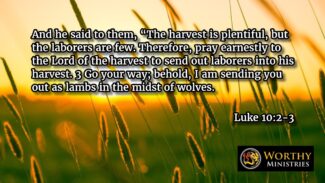
The harvest is plentiful!

When Yeshua (Jesus) spoke these words not only to the seventy He sent ahead of Him, but to every disciple who follows Him into the world, it’s a striking picture: fields overflowing with a harvest, ready to be gathered. The problem isn’t the readiness of the harvest — it’s the shortage of workers willing to go.

Click to continue – there’s more encouragement ahead.

Mercy Triumphs Over Judgment!

In the parable of the unmerciful servant, the servant mistakenly thought that he could demand justice from another servant all the while asking mercy for himself from the king. When the king found out about this servant’s awful behavior, he became enraged and said to him “You wicked servant, I canceled all that debt of yours because you begged me to; couldn’t you have had mercy on your fellow servant just as I had on you?”

Keep reading – God’s message continues.

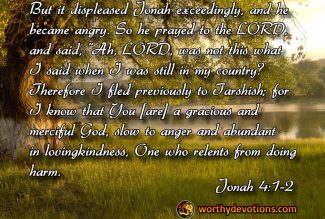
Have Mercy on Me!

We continue looking at Jonah, and find him in Chapter 4 displeased with God’s mercy toward Nivevah. The Assyrians were arch-enemies of Israel and among the cruelest nations in history. Instead of being elated that God spared 120,000 Ninevites Jonah preferred to see his own pronouncement of judgment executed by the Lord. “Let those Assyrians get what’s coming to them…

Click here to keep walking through this Word-filled moment.

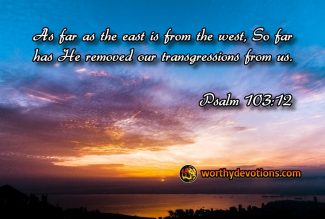
May Your Sins be Removed as Far as the East and the West!

One of the main lessons of Yom Kippur is understanding the significance of “rachamim”, the mercies of God. The scripture expressed that our sins are removed as far as “the east is from the west” — meaning they are completely forgiven when confessed. On the feast of Yom Kippur, or the Day of Atonement two goats are involved in the sacrifice. The blood of the first goat was placed on the mercy seat of the Ark of the Covenant in the Holy of Holies. The other, or “scapegoat” was released into the wilderness, signifying that our sins were not only covered, but also removed. In the days of the Temple, this “scapegoat” was led through the Eastern Gate toward the Mount of Olives where it would disappear from view, as it fulfilled the removal of sins from the people.

Keep going – the Lord may have more to show you.